Snapshots in Ecuador
My travels, told through photos

Note to Reader:
A lot has happened since Mashpi, and I’ve been slow to write. I bounced around Ecuador for several weeks — seeing wildlife in Mindo, taking a Spanish course in Quito, living with a generous family near Otavalo, and venturing into the Amazon in Tena — and I’m now making my way through Peru. Rather than writing about each spot in detail, I want to give you a few “snapshots” of my favorite moments, told through my Fujifilm XT100. I’m beginning to move my photography style away from chasing pure aesthetics towards trying to capture stories. These aren’t in order, but please enjoy!
Tena: Refuge in the Amazon
I was wandering the middle of the Amazon Rainforest when dark clouds rolled overhead and cast an ominous shadow over the jungle. Melchor, the guide accompanying me, suddenly stopped and warned me that we had twenty minutes until the rain began. He said he knew a place we could go, but we had to hurry. To be honest, he looked worried.
So there I was: running through the Amazon to god-knows-where, ducking under branches and breaking through spiderwebs, trying not to think about the spiney ‘samurai spiders’ that might now be somewhere on my body. Thunder rumbled. A few raindrops smacked the leaves above. Finally, we burst into a clearing overlooking a field of banana palms and a small jungle house. Melchor said he knew the family there and that we could wait out the storm under their roof. I was just along for the ride.
The family welcomed us inside and offered some sour fruits that looked a bit like scaly acorns. They weren’t very tasty, but I was thankful for the hospitality — especially once the storm fully hit minutes later. And in the rainforest, when it rains, it pours.
There were two kids in the family, and they seemed fascinated by me. With Chinese blood, I’ve gotten used to being a rare sight in rural Ecuador, but once they realized I wasn’t an alien, we got along great. I kicked a ball around with them, sometimes tossing it just to hear the little girl shriek with excitement.
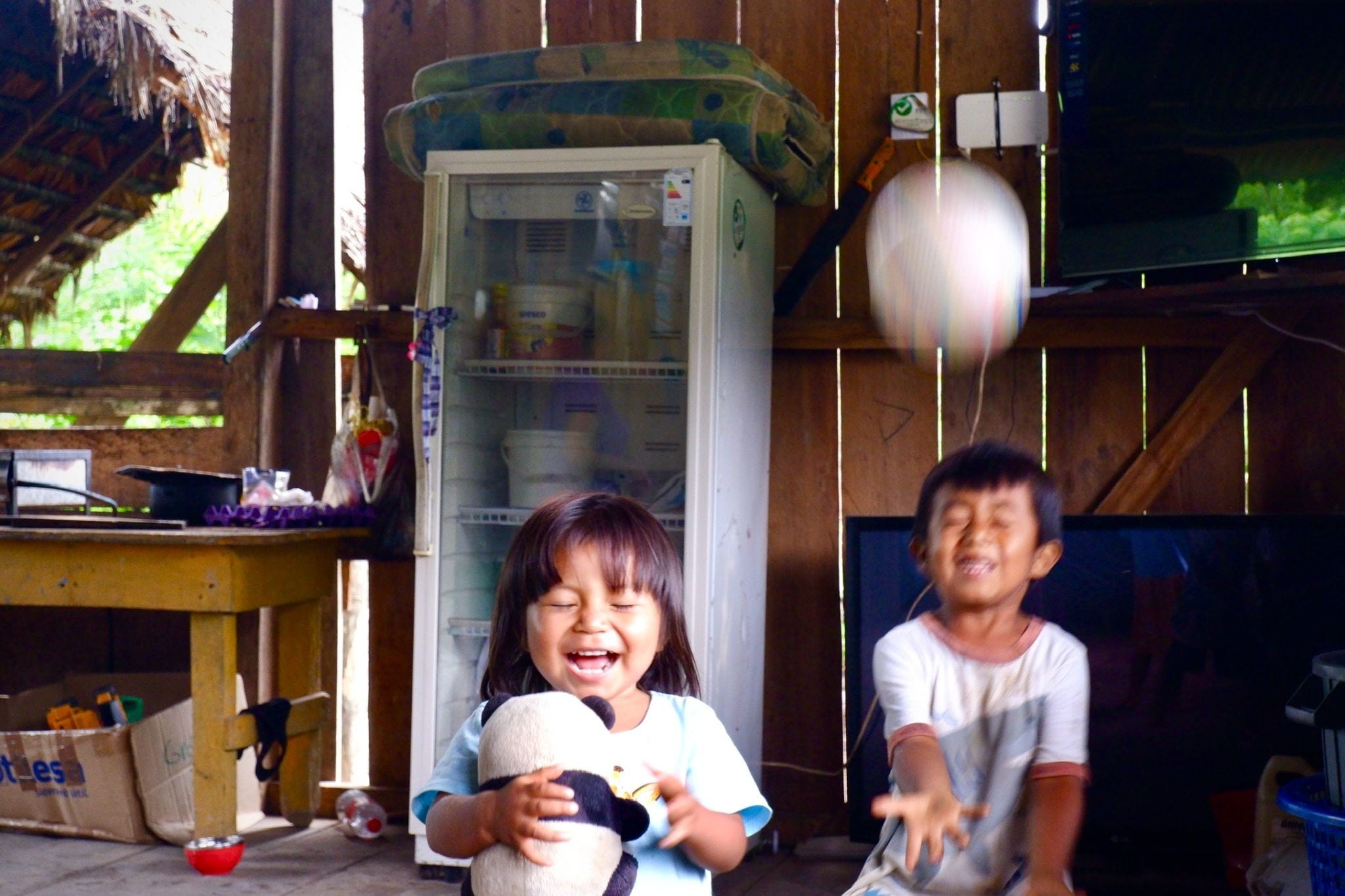
Eventually, they got bored of the ball and scoured through a deteriorating cardboard box labeled ‘gratis’ (free). Broken toy trucks, figurines with missing heads, and assorted plastic shapes — these toys were once someone else’s trash, but were now the sources of imaginative joy. The boy and I drove the trucks around the table and walls, vrrrrroom, and I taught him how to take use my camera, which used to take pictures like this:
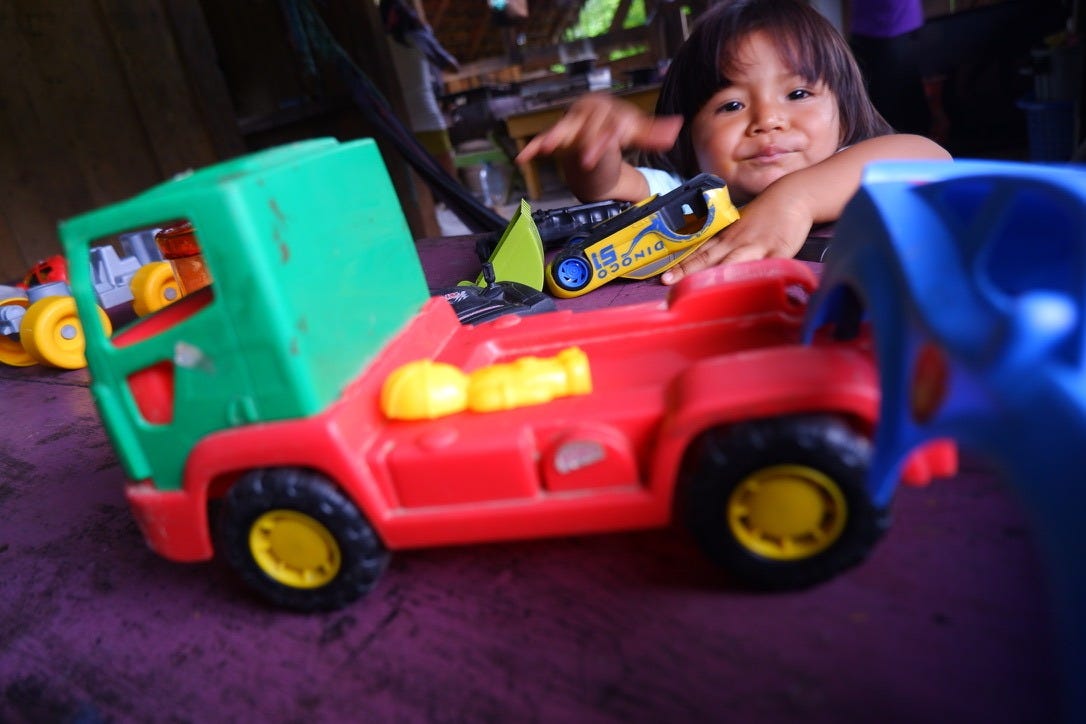
A few minutes later, the younger sister came back from digging in the box… with a gun in her hand. Holy shit!
It took me a second to realize it was made of plastic, but when a shrieking toddler charges at you, waving a pistol in your direction, your heart rate shoots up a bit. Recovering from a slight panic, I picked up my camera and took some of the best shots from my trip so far:
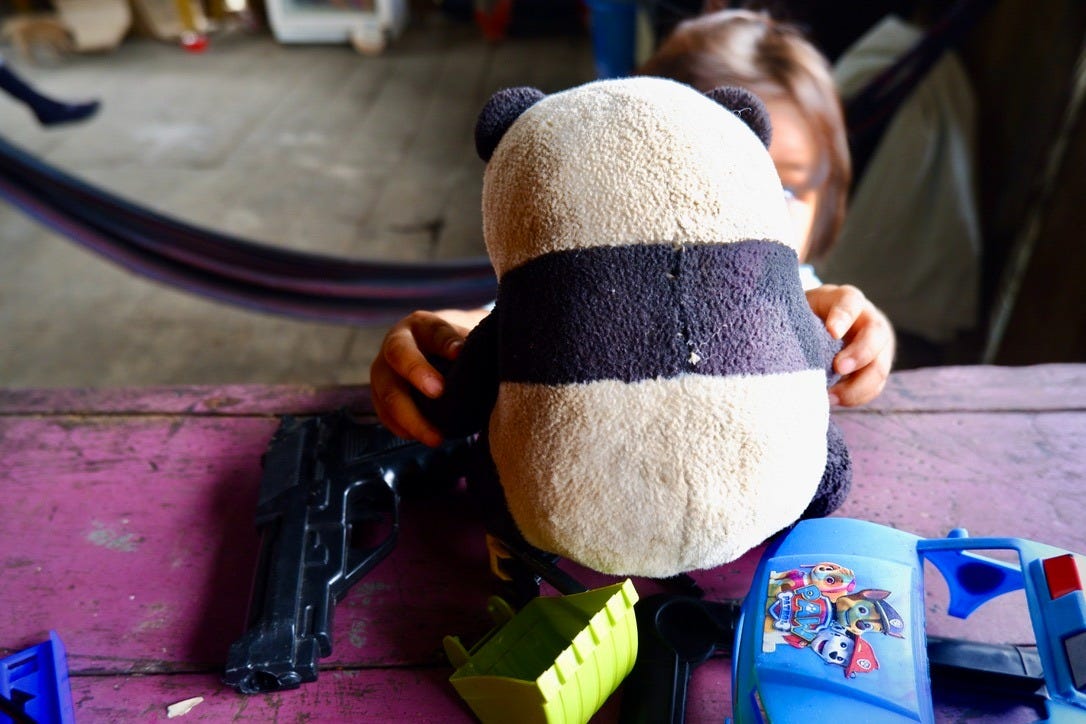


The thing is, I’m not even sure if she knew what it was. She never held it by the handle and played with it as if it were any other toy. I just loved the metaphor of a gun in an abandoned toy box, finding its way into the hands of this adorable girl. I couldn’t help but be reminded of one of my favorite movies, City of God, and the ways in which our culture of violence seeps into even the most innocent lives.
A gun beside a stuffed bear? C’mon. That’s crazy.
Quito: Day of the Dead
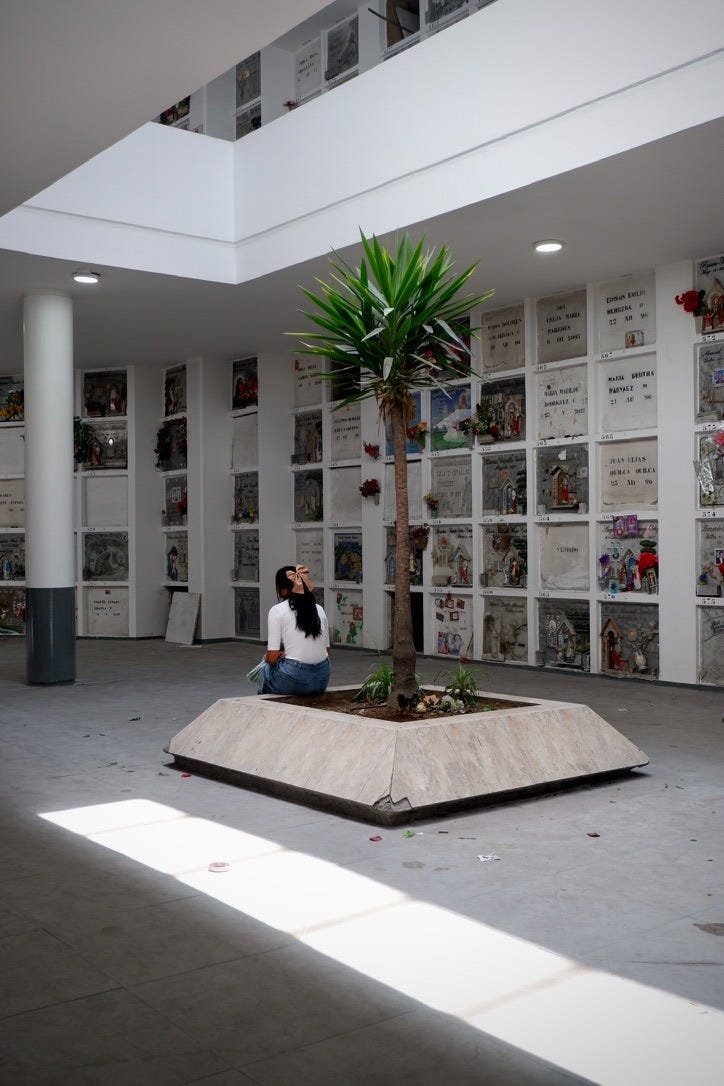
After recovering from a brutal sickness in Quito, I worked up the energy to get out of my homestay and venture into a cemetery on Dia de los Muertos. I didn’t know much about the holiday beyond the Mexican traditions, but I quickly learned it’s celebrated across Latin America in all sorts of ways. In Ecuador, people drink colada morada and eat these doughy, baby-shaped breads — guaguas de pan — and spend the day honoring relatives by cleaning and decorating their gravesites.
I couldn’t tell if the atmosphere was more joyful or somber. In some corners of the cemetery, families were laughing, catching up, and sharing food. In others, people cried quietly, and I suddenly felt a little shitty for just standing there with my camera. Still, the cemetery itself was pretty photogenic though.


Otavalo: Guinea Pigs
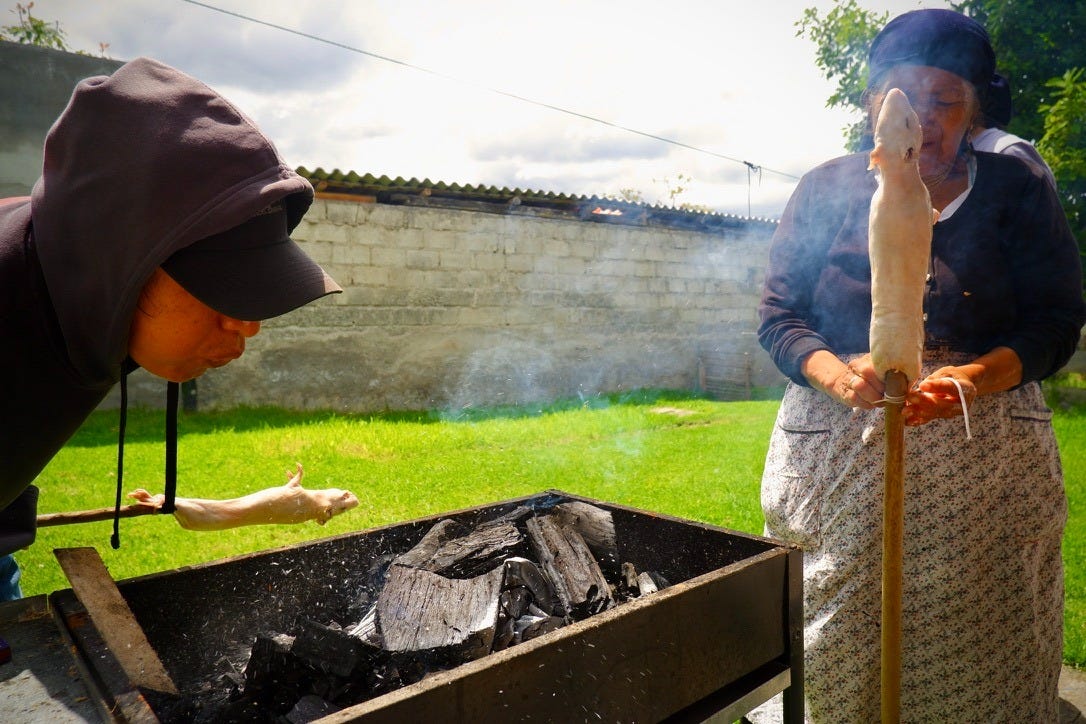
I was staying with an Indigenous Kichwa family in a small mountain town called Peguche, just outside of Otavalo, Ecuador. Goddamn, I was absolutely spoiled — it was the family of a street musician I’d met in Seattle, and their “mi casa es tu casa” hospitality went further than I ever expected. They wanted to give me a real family experience, and that began with a very labor-intensive meal.
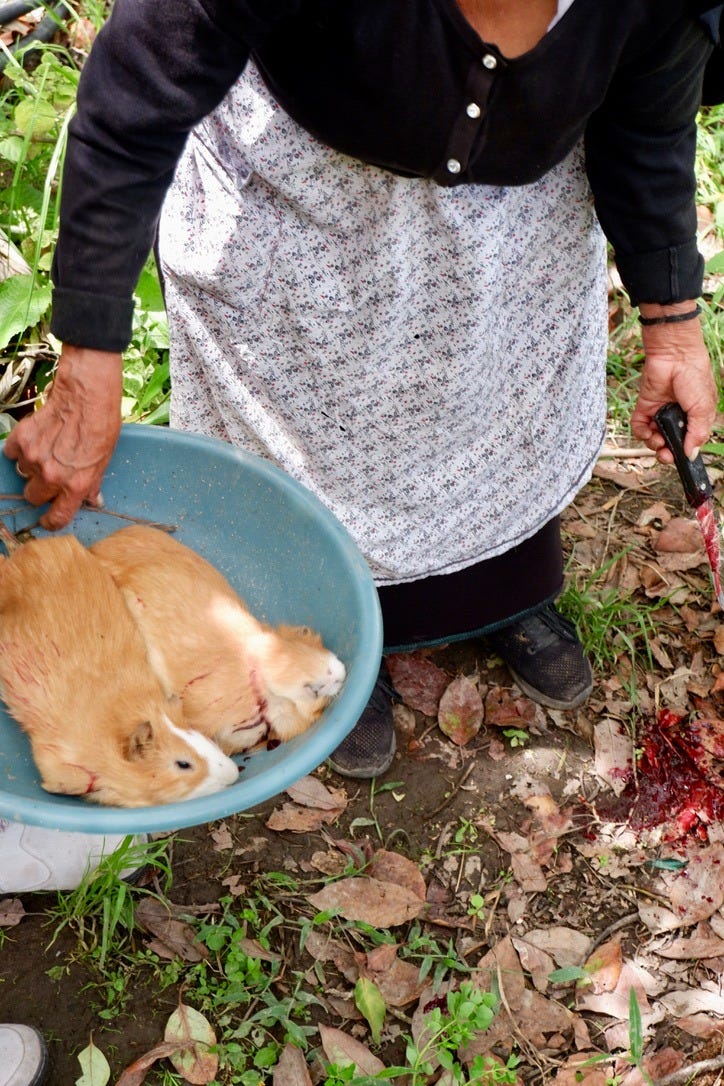
The first step didn’t begin in the kitchen — it started in a room of a hundred squeaking cuyes on the family farm. We scanned the bunch, and two plump guinea pigs were hand-picked — not as pets, like you might expect from a six year old at PetCo, but as our main course. Maria Rosa carried them out to a patch of grass, gripping them with her freakishly strong 84-year-old hands, and executed them with a dull knife sawed along their tiny rodent throats. Their limp bodies weighed about a pound each and their cuteness definitely began to fade as their soft coats were now splattered with blood.
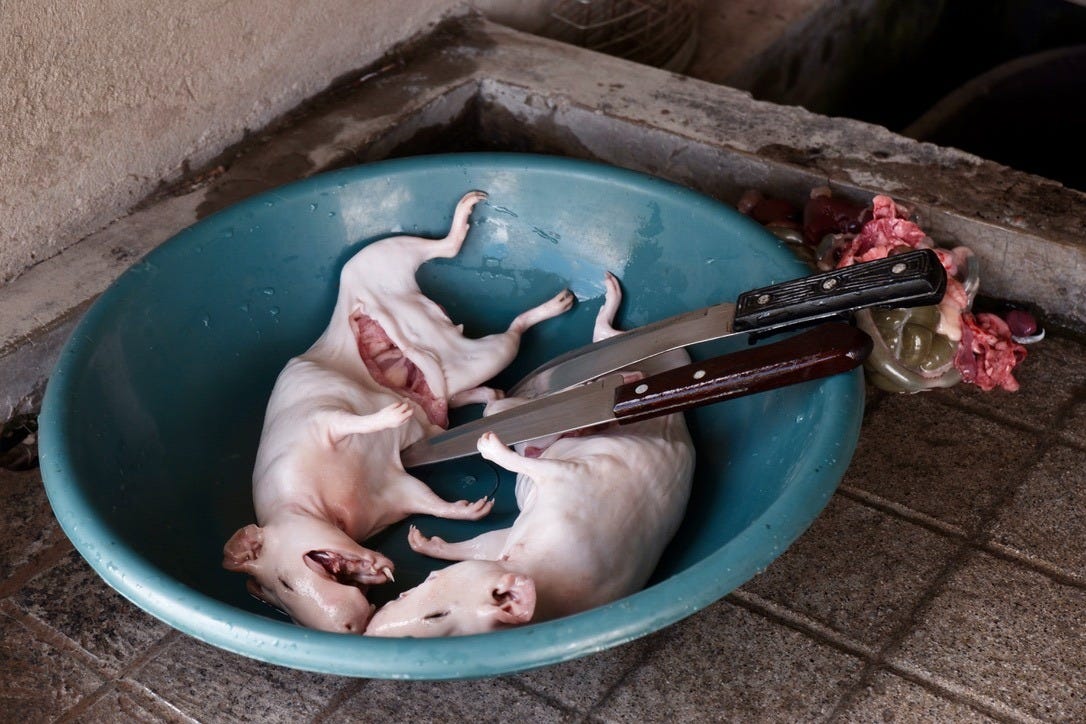
They only became uglier from there. We dipped them in boiling water and plucked out clumps of fur by hand; now hairless and ghostly white, their stomachs were sliced open and their green-gray guts spilled out. Teeth sawed with a knife, jaws snapped out of place — by the end, they looked less like guinea pigs and more like Gollum from Lord of the Rings. My appetite felt spoiled.
They were salted, seasoned, and fitted on thick skewers so we could roast them over an open fire — a bit like marshmallows, just a little less “sweet.” After almost an hour, their skin crackled to a dark golden-brown and juices hissing out every so often. They were ready to eat.


We divided them up and served them alongside boiled potatoes and a thick cornflour soup. I bowed my head as they recited a Christian prayer, and we ate.
For those who might be curious: it tasted like chicken. Maybe a bit tougher and stringier, though the flavor wasn’t anything special. After hours of work, the meat was still rewarding, but the crispy, salty skin was easily the highlight — it was like a delicious cross between chicharrón and a Lays potato chip.
I’ve met plenty of travelers who refuse to eat cuy. Some had childhood pet guinea pigs; others just can’t bring themselves to cross that line. Unfortunately, the seal has been broken for me and any illusion of morality is long gone. But honestly, you eat what you’re served, and I was just grateful for a home-cooked meal shared with a family that treated me like one of their own.
Bonus Content: More Yummy Animals!


Tena: On the Bus
This last picture is just one I really love. I was riding a bus in Tena when we stopped to pick up fifty kids after school. They flooded the once-quiet bus, filling every seat and inch of the aisle. A couple of the kids next to me got curious about my camera and wanted to play with it. They posed, laughed, and made faces, but this one was my favorite.
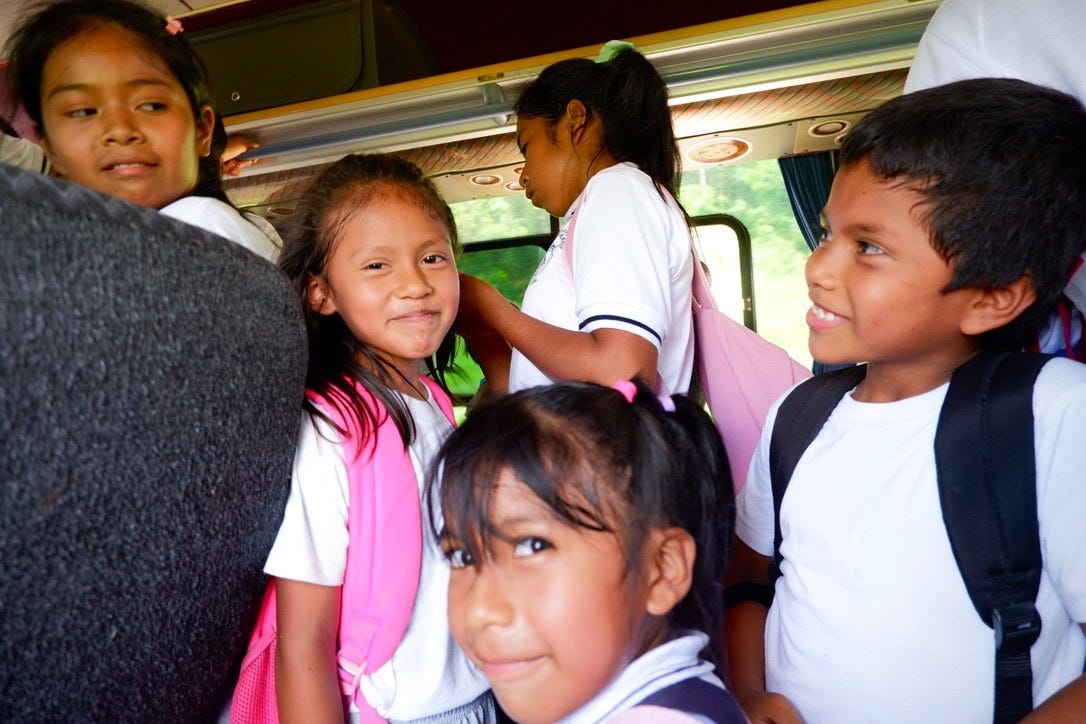
I love the way their faces fill the entirety of the frame, the smiling girls in the middle, and the unreciprocated expressions shared by the kids making eye contact across the shot. That boy on the right was a character and I love that you can see the personalities in their faces. That was a good memory.
Now, there’s a whole trope of travelers — more like tourists — known for taking pictures of kids in “developing” countries. Sometimes they’re called “poverty tourists” and they’re often unaware of power dynamics in tourism, feeling entitled to take pictures of whatever they want. Now that I’ve included several pictures of kids in this post, I wondered whether I’m drifting into that territory. But I don’t think it’s so black and white.
There are long-standing debates about ethics within travel and street photography, and I’ve been thinking about them a lot here. In the famous book On Photography, Susan Sontag says “to photograph people is to violate them, by seeing them as they never see themselves, by having knowledge of them that they can never have; it turns people into objects that can be symbolically possessed. Just as a camera is a sublimation of the gun, to photograph someone is a subliminal murder.”
Damn. I understand her point. But at the same time, I’ve come to a different perspective.
Photography, especially the types that engage with strangers, is so much more than simply taking pictures. More often than not, people are aware I have a camera and the process of shooting becomes an interaction, not just a one-sided extraction of a photo. I used to shoot incognito, staying invisible and trying to capture a raw moment without being noticed. Now, I see the power of a camera to actually bridge a new connection. If done respectfully, which I always strive for, I think photography can be a way not just to document a place, but to engage with it.
I mean, look at this picture of the Amazon girl before we started playing and taking pictures:
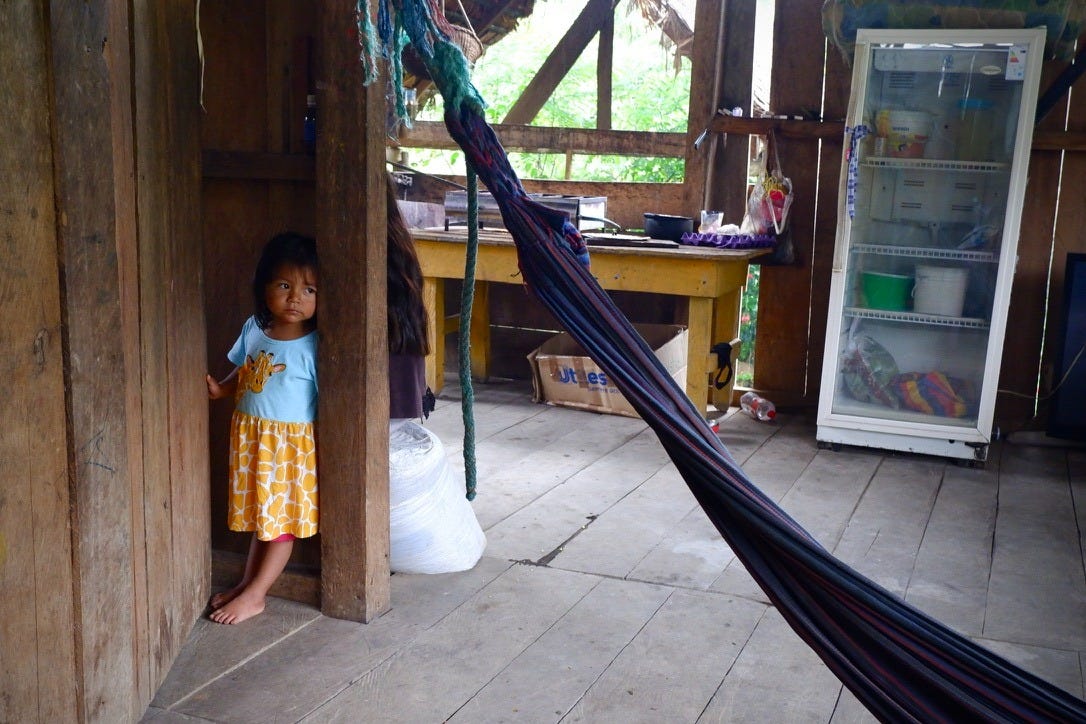
Not to sound like some sort of savior, but I think that brief connection enriched both of our lives, and the camera actually played a key role in building that joyful experience.
As I hopped on the back of a motorcycle after the rainstorm passed, I snapped one last photo of the family and said my goodbyes. We’ll probably never see each other again, but as I rode away with photos and memories, I had an honest feeling that those kids were left with at least a little more joy in their day.
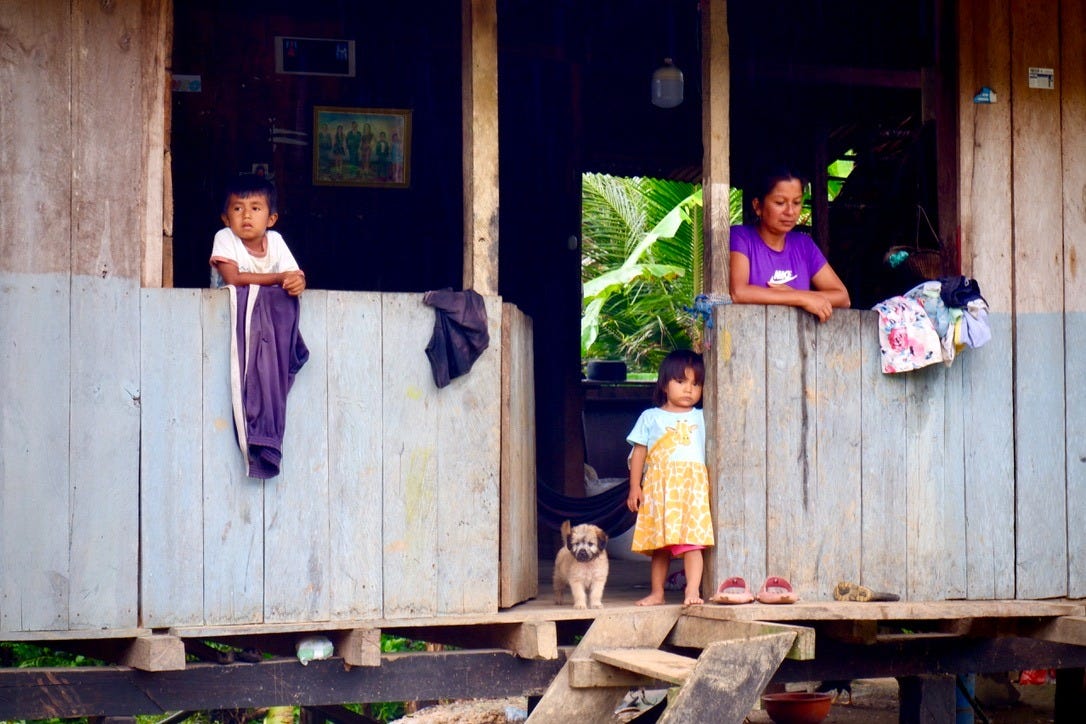
It’s my newer philosophy of travel: it’s not enough to simply “do no harm” because your presence as a foreigner already has an impact. Of course, be mindful of cultural differences — but I think it’s better to try, in small ways, to engage with the lives you intersect with. To enrich, rather than observe from a distance. And of course, to put the camera down and let the best moments breathe without the distraction of photography.
Love this man. Took me a second time to finish reading. Cultural enrichment and learning more. So happy to hear these stories. Keep going
Love your insights and mindful reflections, even though you cut my dinner short. Keep it going buddy!